
Best Practices for Bulk Messaging Compliance
Ananya Desai
Head of AI Research
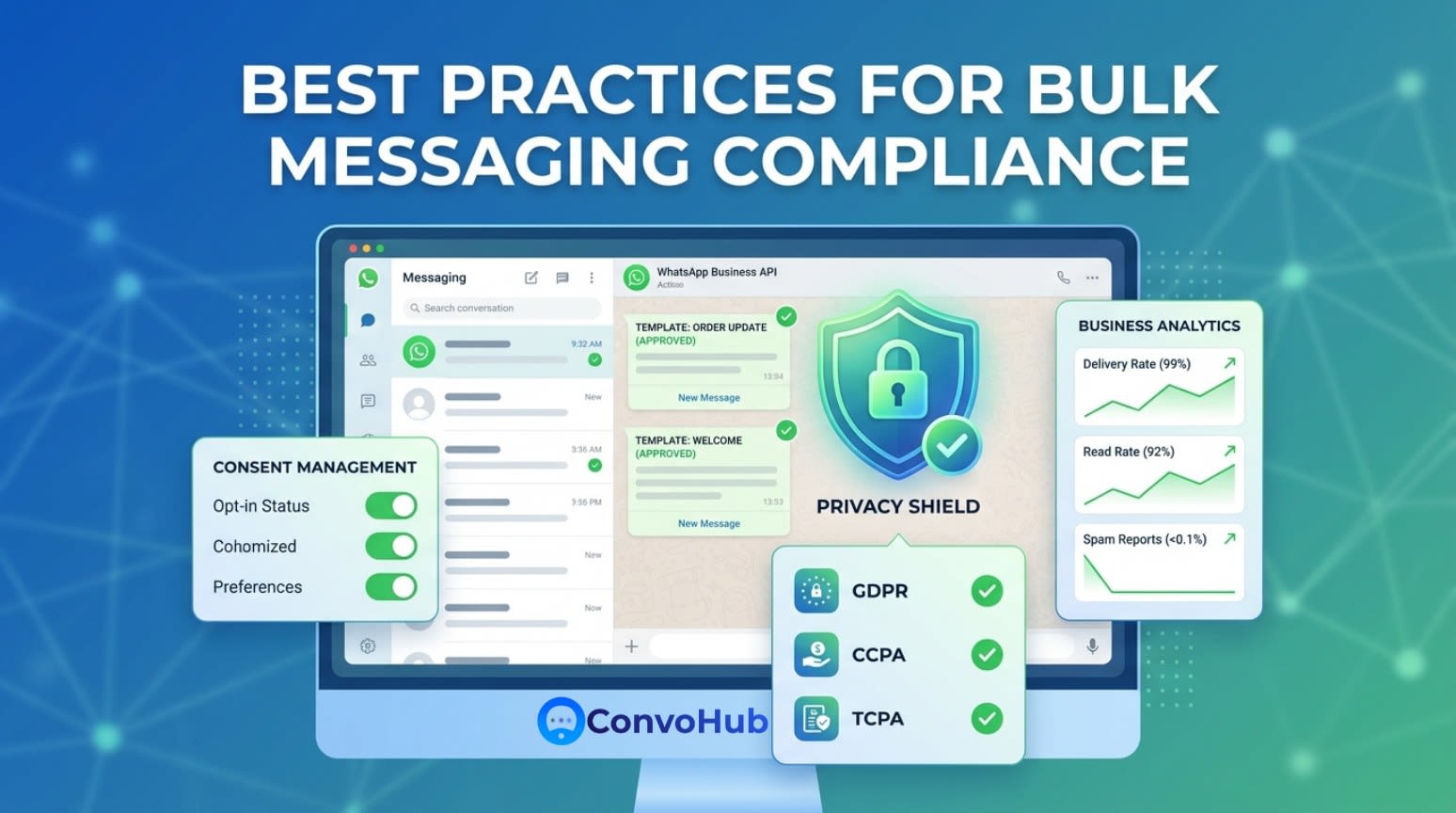
Best Practices for Bulk Messaging Compliance
Bulk messaging can be an incredibly effective way to reach customers, but it comes with significant regulatory responsibilities. As messaging platforms like WhatsApp open up to business communications, understanding and adhering to compliance requirements is essential. This article outlines best practices for maintaining compliance while running effective bulk messaging campaigns.
The Regulatory Landscape
Bulk messaging is governed by various regulations depending on your location and target audience. Some key regulations include:
GDPR (European Union)
The General Data Protection Regulation impacts how businesses collect, store, and use customer data for messaging:
- Explicit consent requirements
- Right to be forgotten
- Data minimization principles
- Purpose limitation for data use
TCPA (United States)
The Telephone Consumer Protection Act regulates telemarketing calls, auto-dialed calls, and text messages:
- Prior express written consent for marketing messages
- Clear opt-out mechanisms
- Restrictions on messaging times
- Significant penalties for violations
WhatsApp Business Policy
WhatsApp has its own set of rules for business messaging:
- Message template approval process
- 24-hour messaging window for business-initiated conversations
- Quality rating system
- Content restrictions
Local Regulations
Many countries have their own regulations governing messaging and data privacy that must be considered for international campaigns.
Essential Compliance Best Practices
1. Obtain and Maintain Proper Consent
The foundation of compliant messaging is proper consent:
- Be Explicit: Clearly state what messages the customer will receive
- Keep Records: Maintain documentation of when and how consent was obtained
- Refresh Consent: Periodically confirm continued interest in receiving messages
- Double Opt-in: Consider implementing a confirmation step for new subscribers
2. Provide Clear Opt-Out Methods
Every message should include a simple way for recipients to stop receiving communications:
- Include straightforward opt-out instructions in every message
- Honor opt-out requests promptly (within 10 business days is standard)
- Maintain an opt-out list to prevent messaging to those who have unsubscribed
- Make the opt-out process as simple as the opt-in process
3. Maintain Message Quality and Relevance
Compliance isn't just about legal requirements—it's also about meeting platform standards:
- Send valuable, relevant content to your audience
- Maintain consistent messaging frequency
- Monitor engagement metrics and adjust strategies accordingly
- Avoid excessive messaging that could be perceived as spam
4. Implement Proper Data Management
Responsible data handling is crucial for compliance:
- Store customer data securely
- Limit data access to essential personnel only
- Implement data retention policies
- Regularly audit your data practices
5. Develop Clear Messaging Policies
Document your approach to compliant messaging:
- Create written policies for messaging practices
- Train team members on compliance requirements
- Establish approval workflows for new message templates
- Conduct regular compliance reviews
Industry-Specific Considerations
Different industries face unique compliance challenges:
Financial Services
- Additional regulations like GLBA in the US
- Restrictions on promotional language
- Requirements for secure transmission of sensitive information
- Record-keeping obligations
Healthcare
- HIPAA compliance in the US
- Patient consent requirements
- Limitations on what can be communicated via messaging
- Special considerations for appointment reminders
Retail and E-commerce
- Truth in advertising requirements
- Promotional content restrictions
- Special rules for time-sensitive offers
- Cart abandonment message regulations
Technical Implementation for Compliance
Message Template Management
- Create a library of pre-approved, compliant templates
- Implement a review process for new templates
- Regularly audit existing templates for continued compliance
- Use variable fields appropriately and consistently
Timing and Frequency Controls
- Implement systems to respect time-zone restrictions
- Set appropriate frequency caps to prevent message fatigue
- Create cooling-off periods between campaign waves
- Monitor and adjust based on engagement metrics
Integration with CRM and Consent Management
- Sync messaging platforms with your CRM system
- Implement real-time consent status checking
- Automate opt-out processing
- Maintain comprehensive contact histories
Handling Compliance Violations
Despite best efforts, compliance issues may arise:
1. Respond Quickly: Address potential violations immediately
2. Investigate Thoroughly: Determine the cause and scope of the issue
3. Remediate Appropriately: Take corrective action and contact affected individuals if necessary
4. Document Actions: Keep records of all steps taken to address the violation
5. Improve Processes: Update procedures to prevent similar issues
Conclusion
Compliance in bulk messaging isn't just about avoiding penalties—it's about building trust with your audience and maintaining your reputation. By implementing these best practices, you can create effective messaging campaigns that respect both regulatory requirements and customer preferences.
Remember that compliance requirements evolve over time, so staying informed about regulatory changes and platform policy updates is essential for long-term success in bulk messaging.